Is Whole-Body EMS Safe? What Professionals Should Know
Whole-Body EMS can be used responsibly when screening, supervision, progression, intensity, and recovery are handled correctly. This guide explains what professionals should know before using or implementing WB-EMS.
09/22/2026
8 min read
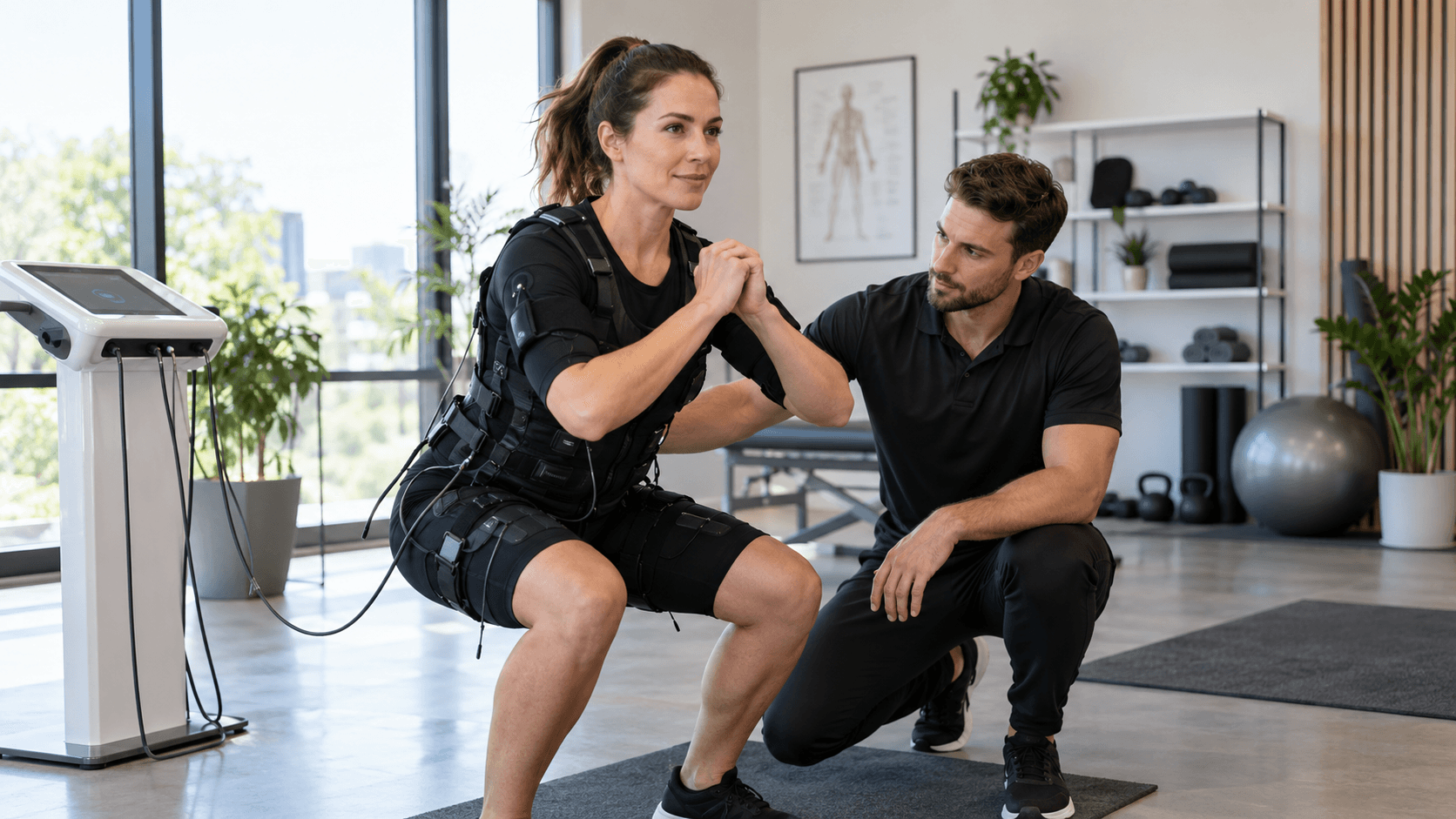
Is Whole-Body EMS Safe? What Professionals Should Know
Whole-Body Electrical Muscle Stimulation, or WB-EMS, can activate several major muscle groups at the same time through controlled electrical stimulation.
That is one of the reasons the technology has attracted attention from trainers, clinics, studios, and wellness professionals.
It is also why safety should not be treated casually.
The right question is not simply, “Is WB-EMS safe?”
A better question is:
“Is WB-EMS being used with the right screening, supervision, intensity, progression, and recovery?”
Current professional guidance emphasizes all of those factors. WB-EMS can be used responsibly, but that does not mean it is appropriate for every person, every setting, or every device.
For professionals considering WB-EMS, the equipment is only one part of the system. How the program is implemented matters just as much.
What Is Whole-Body EMS?
Whole-Body EMS uses electrical impulses to stimulate multiple major muscle groups during controlled exercises or movements.
Unlike a small EMS pad placed on one isolated area, WB-EMS can involve a much larger portion of the body at the same time.
That broader stimulation can create a significant muscular demand, which is why WB-EMS should be approached as a structured training method rather than simply a device that someone wears.
Professional WB-EMS usually involves:
participant screening
supervised sessions
individualized intensity
gradual progression
movement coaching
recovery planning
documentation
Those elements are what separate a professionally managed program from casual or unsupervised use.
So, Is Whole-Body EMS Safe?
For appropriately screened participants and when used according to professional guidance, WB-EMS can be delivered responsibly.
But it would be misleading to say that WB-EMS is completely risk-free or suitable for everyone.
International guidance on WB-EMS places strong emphasis on qualified supervision, health screening, careful progression, communication with the participant, and sufficient recovery between demanding sessions.
That is especially important for people who are new to WB-EMS.
A professional session should not begin with the mindset of:
“How high can we turn the intensity?”
It should begin with:
“What is appropriate for this individual today?”
That difference matters.
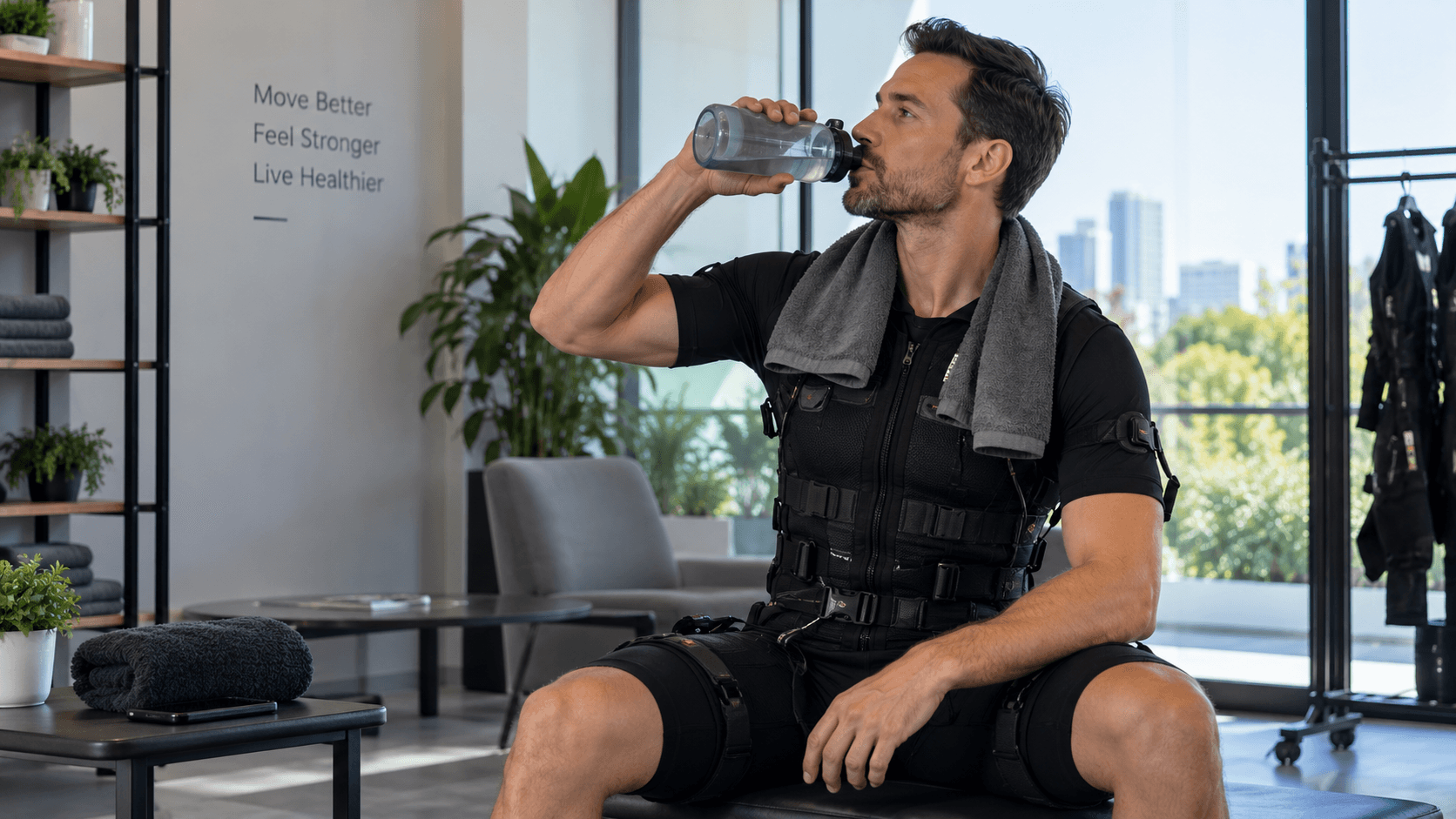
Screening Should Come Before the Session
A responsible WB-EMS program starts before the electrical stimulation begins.
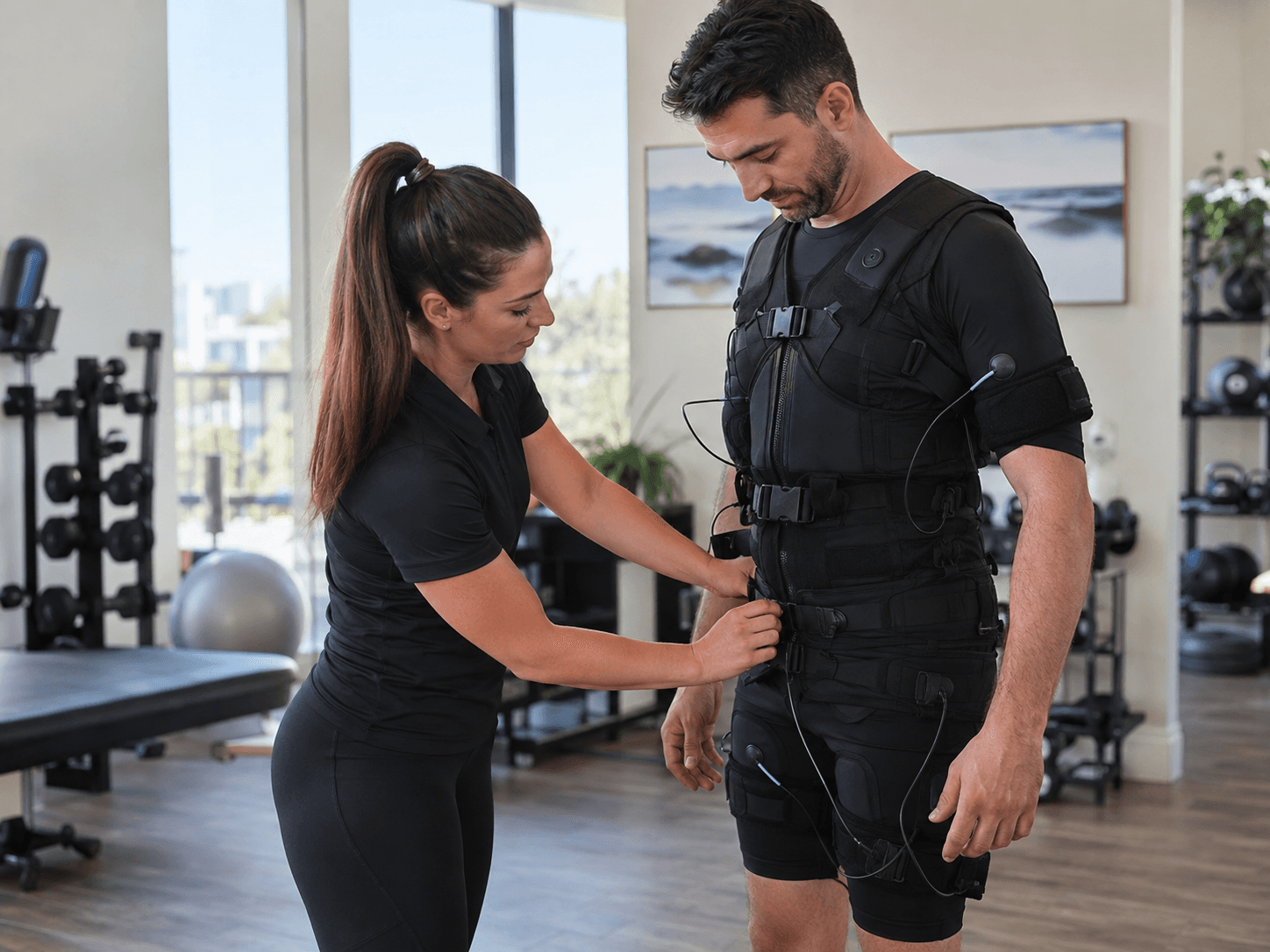
Professionals should understand relevant health history and identify situations where WB-EMS may be inappropriate or where medical clearance may be needed.
This is important because certain medical conditions, implanted devices, medications, recent procedures, or other health factors may affect whether WB-EMS is suitable.
There is also a problem with relying on simplified contraindication lists found online.
Guidance changes as evidence develops.
For example, a 2024 evidence-based consensus update revised some earlier WB-EMS contraindication classifications rather than simply treating every condition the same way.
That is a good reminder that professionals should not copy an old checklist and assume it applies to every participant in every country.
A better approach is to consider:
the participant's individual health situation
the device manufacturer's instructions
professional scope of practice
applicable regulations
medical guidance when appropriate
Screening should support good decision-making, not become a box that someone checks without thinking.
More Intensity Is Not Automatically Better
One of the most common misunderstandings around electrical stimulation is that stronger stimulation must create a better result.
That is not a good rule for WB-EMS.
Because multiple large muscle groups may be stimulated at the same time, aggressive intensity can create a substantial training load.
This is particularly important for beginners.
Professional guidance recommends a familiarization period so new participants can adapt gradually rather than being exposed to very high stimulation immediately.
The goal should not be maximum tolerable intensity.
The goal should be appropriate intensity.
That means considering the participant's experience, movement quality, physical response, comfort, training history, and progression.
Sometimes a lower intensity is the better decision.
Qualified Supervision Matters
WB-EMS should not be treated as a completely passive process where someone puts on a suit and is left alone.
Supervision is an important part of professional use.
A trained professional should be able to observe:
how the participant is moving
whether fatigue is affecting movement quality
how the participant is responding to the stimulation
whether intensity remains appropriate
whether unusual discomfort is developing
whether the session needs to be adjusted or stopped
Communication is also important.
The participant should be able to tell the trainer how the stimulation feels and report pain, discomfort, dizziness, or anything else unusual.
Professional WB-EMS guidance has repeatedly emphasized close trainer-participant interaction.
That does not mean every professional environment has to operate in exactly the same way.
It does mean that supervision should be part of the program, not an afterthought.
Recovery Is Part of WB-EMS Programming
Safety does not end when the session ends.
Recovery matters too.
A participant may feel muscular fatigue or soreness after WB-EMS just as they may after other forms of training.
How someone responds can depend on:
intensity
experience level
exercise selection
overall training load
recovery status
frequency of sessions
International guidance recommends meaningful recovery between intense WB-EMS sessions.
That is especially important after the initial familiarization period.
This does not mean every person needs exactly the same number of recovery days.
It means professionals should not increase frequency simply because WB-EMS sessions can be relatively short.
A short session can still create a significant training stimulus.
Can WB-EMS Cause Side Effects?
Yes.
That is something professionals should be willing to say clearly.
Possible adverse responses have been discussed in the WB-EMS literature, particularly when inexperienced participants were exposed too aggressively.
The broader category of electrical muscle stimulators has also been associated with reports of problems such as skin irritation, pain, burns, bruising, and interference with implanted electrical devices.
That does not mean every WB-EMS device presents the same level of risk.
It means the quality of the device, the intended use, the participant, and the way the session is delivered all matter.
Marketing should not hide those realities.
Professional education should help people understand them.

What About FDA Regulation in the United States?
This is another area where language needs to be precise.
It is not accurate to make a blanket statement such as:
“Whole-Body EMS is FDA approved.”
The U.S. Food and Drug Administration regulates electrical muscle stimulators as medical devices.
Specific devices may have their own regulatory status, labeling, intended use, or clearance.
That status belongs to the specific product.
It should not automatically be applied to every EMS device or every marketing claim made about EMS.
The FDA has also warned against unsupported claims involving things such as dramatic weight loss, girth reduction, or the idea that electrical stimulation alone will create a highly defined physique.
For U.S. clinics and studios, this matters.
Professionals should understand:
what device they are using
what the device is intended for
how it is labeled
what claims can reasonably be supported
whether their use matches the product's instructions and applicable requirements
Good implementation includes responsible marketing.
Does WB-EMS Actually Have Research Behind It?
Yes.
But the research should be communicated carefully.
Studies and systematic reviews have reported positive effects in areas such as muscle strength and muscle mass in certain populations.
At the same time, results are not identical across every population, protocol, or outcome.
For example, research involving non-athletic adults has reported meaningful improvements in muscle-related outcomes.
Research involving already-trained individuals has sometimes shown more limited additional benefits when WB-EMS is added on top of an existing training program.
That difference is important.
It shows why WB-EMS should not be presented as either:
“A miracle replacement for exercise.”
or:
“Something that does nothing.”
The real answer is more nuanced.
Results depend on:
who is using it
how it is programmed
what outcome is being measured
how often sessions occur
what other exercise is being performed
how intensity is managed
Professionals should understand the evidence well enough to explain both its strengths and its limitations.
Professional WB-EMS Is More Than an EMS Suit
The suit gets most of the attention because it is the visible part of the technology.
But the suit is only hardware.
A responsible professional WB-EMS program should have a process around that hardware.
A simple way to think about it is:
Screening → Individualization → Supervision → Progression → Recovery → Documentation
If those pieces are missing, having expensive equipment does not automatically create a good WB-EMS service.
For people evaluating a professional provider, questions such as these may be more useful than asking how powerful the equipment is:
Who supervises the sessions?
What WB-EMS-specific education has that person completed?
How are participants screened?
How is intensity progressed?
How are adverse responses handled?
How much recovery is recommended?
What device is being used?
Is the equipment being used according to its intended purpose?
Those questions tell you more about the quality of the program.
What Should Clinics and Studios Have in Place?
Before offering WB-EMS professionally, a clinic or studio should be able to answer several basic questions.
Who performs participant screening?
There should be a clear process before someone begins training.
What happens when a health concern is identified?
The team should know when additional medical guidance may be appropriate.
Who supervises WB-EMS sessions?
Responsibility should be clearly defined.
How are new participants introduced to stimulation?
Beginners should not automatically be treated like experienced users.
How is intensity progressed?
There should be a reason behind adjustments rather than simply increasing intensity every session.
How are unusual responses handled?
Staff should know what to do when someone reports excessive discomfort or another concerning response.
How is recovery considered?
Scheduling should take the actual training load into account.
Is the equipment being used according to its labeling and instructions?
Professional use should match the device and its intended application.
Are the marketing claims supportable?
A clinic should not promise outcomes that the evidence or device does not support.
If these questions do not have clear answers, the business may need to strengthen its implementation process before trying to scale the service.
The Bottom Line
So, is Whole-Body EMS safe?
There is no responsible reason to answer that question with an unconditional yes.
A more accurate answer is:
WB-EMS can be used responsibly when participants are appropriately screened, sessions are properly supervised, intensity is progressed carefully, the equipment is used correctly, and sufficient recovery is considered.
It is not appropriate for every person or every circumstance.
Some participants may need medical evaluation before using WB-EMS, and in certain situations WB-EMS may not be appropriate at all.
The technology does not remove the need for professional judgment.
It makes professional judgment more important.
Building a Responsible WB-EMS Program
SegaHealth supports professionals and organizations looking to build a more structured approach to Whole-Body EMS education and implementation in the United States.
For professionals developing their WB-EMS knowledge, explore WB-EMS Certification & Training.
Internal link: /certification
For clinics and studios evaluating how to implement WB-EMS professionally, explore WB-EMS for Clinics & Studios.
Internal link: /clinics-studios
You can also explore SegaHealth's WB-EMS Science & Research resources for additional research-informed information.
Internal link: /science&research
Educational Notice
This article is provided for professional education and general informational purposes only. It is not medical advice and should not be used to diagnose, treat, or determine whether WB-EMS is appropriate for a particular individual.
Health status, medications, implanted devices, medical history, device instructions, professional qualifications, and applicable laws or regulations should all be considered. Medical guidance should be obtained when appropriate.
References
Kemmler W., et al. (2023).
Position statement and updated international guideline for safe and effective whole-body electromyostimulation training — the need for common sense in WB-EMS application. Frontiers in Physiology.
von Stengel S., et al. (2024).
Revised contraindications for the use of non-medical WB-electromyostimulation: Evidence-based German consensus recommendations. Frontiers in Sports and Active Living.
U.S. Food and Drug Administration.
Electronic Muscle Stimulators. Consumer and medical-device guidance.
Kemmler W., et al. (2021).
Efficacy of Whole-Body Electromyostimulation on Body Composition and Muscle Strength in Non-athletic Adults: A Systematic Review and Meta-Analysis. Frontiers in Physiology.
Wirtz N., et al. (2019).
Effects of Whole-Body Electromyostimulation on Strength, Sprint, and Jump Performance in Moderately Trained Young Adults. Frontiers in Physiology.
Latest News & Blogs